

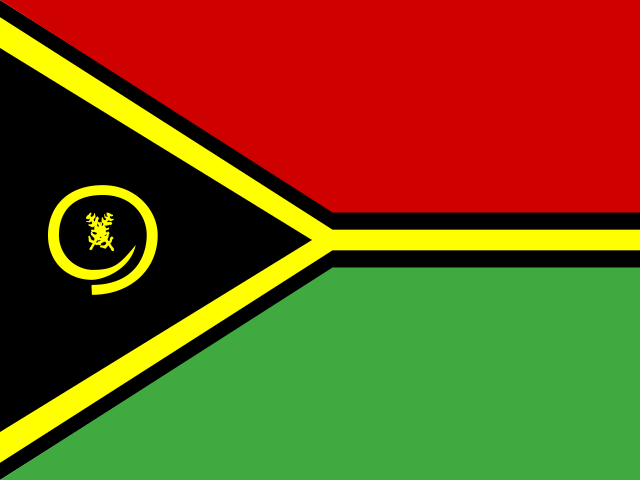
CARE International’s history in Vanuatu
CARE has worked in Vanuatu since 2008, helping communities to better withstand disasters and climate change impacts, and increasing women and girls’ involvement in community and national leadership.
Three-quarters of Vanuatu’s population lives in rural areas and on remote islands. Many lack access to clean water sources, basic sanitation, and essential health services. Families are also very vulnerable to natural disasters that are increasingly common in the Pacific region.
Despite a growing economy, income opportunities are often limited, particularly for women. Violence against women and girls is also a serious problem in Vanuatu, and women are very under-represented in the community, provincial, and national decision-making.
CARE Vanuatu works with communities, civil society organizations, and government partners to help people meet basic needs, build long-term stability, and better prepare, withstand, and recover from crises.
CARE and partners’ work in Vanuatu today
CARE and our partners work with communities across Vanuatu to strengthen disaster preparedness, improve access to services, and support community resilience to crises.
We focus on:
Crisis response
Vanuatu has been ranked the country most at risk of natural disaster for five consecutive years. Earthquakes, tsunamis, and cyclones are regular events in Vanuatu – often with devastating consequences.
CARE supports communities in preparing for and recovering from these disasters. We’re helping by establishing and training local disaster committees. This includes running disaster simulations, providing first aid training, and trialing new disease-resistant crop varieties.
CARE also provides disaster training for local authorities, so women’s skills and needs are recognized during a disaster.
Food and water
As most of the population lives in rural areas, many people in Vanuatu do not have safe water sources or sanitation facilities like toilets and clean water taps.
CARE has been working with communities to improve access to water and sanitation facilities. Our water, sanitation, and hygiene program rehabilitates community water systems and helps communities with drinking water planning. We also build toilets and run hygiene and sanitation training in schools, with a special focus on menstrual hygiene management for girls.
Gender equality
As it happens in many countries, women and girls in Vanuatu often face more challenges than men and boys. It’s more difficult for them to study, access health services, and participate in decision-making, whether at home or in public spaces.
They also face widespread violence – at least 60% of women in Vanuatu have experienced physical or sexual violence from their partners.
CARE and our partners work to build the aspirations and skills of women and girls, and transform communities to support equality for all people.
Focus on women and girls
Women and girls are at the centre of CARE’s work in Vanuatu.
CARE and our partners support them to:
- Strengthen leadership and participation in decision-making at all levels
- Help survivors of gender-based violence access protection services and support networks
- Participate in preparation for disasters and recovery from them
- Improve opportunities for livelihoods and wellbeing
For example, CARE’s Young Women’s Leadership program is equipping young women to advocate for equality in their spheres of influence.
By supporting women’s leadership and community resilience, CARE helps strengthen the ability of families and communities across Vanuatu to prepare for and recover from disasters.
For recent updates on CARE Vanuatu’s work, see here.


