

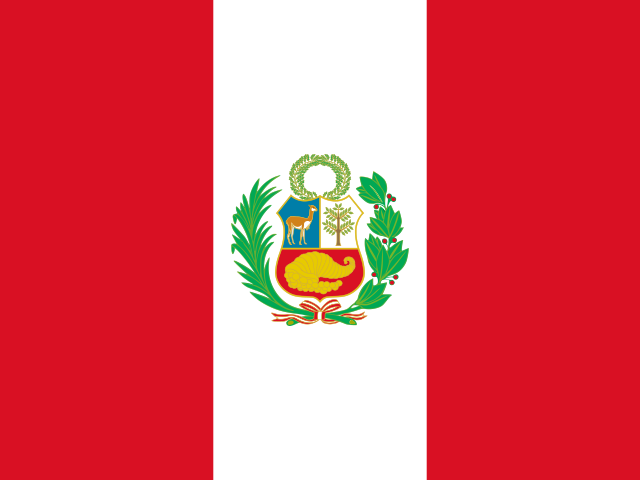
CARE International’s history in Peru
CARE International first worked in Peru between 1952 and 1958 to help increase access to education. In 1970, we resumed activities following the worst natural disaster in Peruvian history, the Ancash earthquake.
The quake caused a massive avalanche that killed nearly 70 thousand people, affected millions more, and destroyed key infrastructure. CARE and our partners supported national organizations and the government to provide urgent aid and long-term reconstruction.
In 2010, CARE Peru became one of CARE International’s 20 Members and Affiliates. It contributes to efforts to fight poverty and inequalities globally, while responding to the country’s most pressing social and development challenges.
Over more than five decades of continuous work, we have expanded our focus beyond emergency response. Together with our partners, we have implemented over 1,000 development and humanitarian projects across rural, urban, Amazonian, and high-Andean regions. In the past ten years alone, CARE Peru has contributed to improving the lives of more than 8 million people, helping increase access to food, education, economic opportunities, and more.
CARE and partners’ work in Peru today
CARE Peru and our partners fight poverty and inequality, with a specific focus on girls and women. We focus on four main areas:
- Education and health: We work on the root causes of health and education gaps to tackle them. CARE Peru and our partners help train professionals and students (especially on Finance and STEAM skills), boost leadership, increase social participation, and reduce violence.
- Making the economy work: We support women in increasing opportunities to earn an income. We do this by helping them access essential financial tools (like loans and digital accounts), providing business skills trainings for women in MSEs, and supporting sustainable agriculture that increases production and profits. We also help ensure they work in dignified spaces that respect their rights.
- Climate resilience and natural resource management: We work with communities, including Indigenous people, to promote equal access to resources, ecosystem conservation, community rights and participation, and adaptation to climate change impacts.
- Crisis response and protection: We help communities’ capacity to predict, withstand, and recover from humanitarian crises. This includes supporting people affected by disasters and migration, with a focus on girls and women.
Focus on women and girls
Addressing girls’ and women’s specific needs and boosting their leadership is at the heart of all we do. We focus particularly on:
- Adolescent girls’ education, protection, and life skills
- Financial inclusion
- Prevention of violence against girls and women
- Adaptation to climate change impacts
- Addressing their specific needs during humanitarian crises
What does this look like in practice?
Girls with Opportunities (Niñas con Oportunidades in Spanish) is a key example of how we fight poverty, focusing on girls and women. The initiative supports teenage girls in rural and vulnerable regions - such as Amazonas, Cajamarca, Lambayeque, Lima, and Callao – to complete secondary education with well-being, agency, and equal opportunities.
The program strengthens technical knowledge, socio-emotional skills, financial education, and life planning capacities - from managing personal finances to making decisions about their future. We also work with teachers, schools, families, and local education authorities to achieve these goals.
Between 2022 and 2024, the program reached more than 14,000 students and trained over 100 teachers. Over 80% of participating students completed secondary school — around 10% higher than the national average for rural girls—and adolescent pregnancy cases in participating schools were reduced by 50%.
Learn more about CARE Peru’s work here.


