

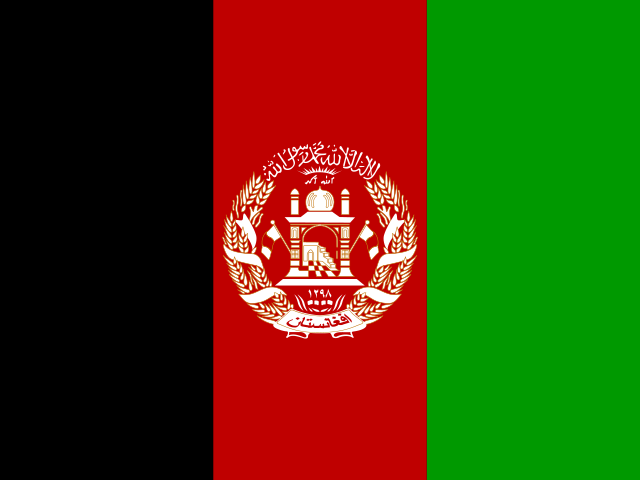
CARE International’s history in Afghanistan
CARE has worked in Afghanistan since 1961, supporting communities affected by conflict, natural disasters, poverty, and instability. For more than six decades, we have remained a committed humanitarian and development partner, working directly with local organizations to reach remote and vulnerable communities.
CARE’s work in Afghanistan began with education programs. Over time, it expanded to include support for women’s livelihoods, health services, food security, and community-led development.
Today, CARE works in eight provinces: Kandahar, Herat, Balkh, Ghazni, Kabul, Khost, Nangarhar, and Paktya. Between July 2024 and June 2025, CARE and partners reached over 1.25 million people, including more than 845,000 women and girls.
CARE and partners’ work in Afghanistan
CARE Afghanistan and our partners work across three main areas:
Health and education
We support access to basic health services in many communities. This includes primary health care, nutrition support, mental health services, and care for mothers and children. CARE and partners also help children, especially girls, access education through community-based learning spaces in remote areas.
Humanitarian action
CARE provides life-saving aid to people affected by conflict, displacement, natural disasters, and economic crises. This includes cash assistance, food support, water and sanitation services, shelter, protection, and emergency response in both rural and urban communities.
Resilience and livelihoods
We work with communities to strengthen food security and income opportunities. Programs support farming, livestock and poultry, skills training for young people, and cash-for-work activities. These efforts help women and families earn a living and strengthen local markets.
In 2025, CARE built and repaired shelters for families affected by the 2023 Herat earthquakes and continues to respond to recurring natural disasters and displacement. We also support displaced Afghans who return home and often face challenges to resettle.
Focus on women and girls
Women and girls are at the centre of CARE Afghanistan’s work.
CARE supports women and girls to:
- Build economic independence through savings groups, skills development, producer groups, and market access
- Access life-saving health services, child and maternal care, and psychosocial support
- Improve nutrition and caregiving practices for mothers and children
- Continue their education through community-based learning programs
- Strengthen their leadership and role in community decision-making
Across everything we do, CARE works to ensure women and girls have improved access to essential services, economic opportunities, and support during crises.
For recent updates on CARE Afghanistan, please see here.


