

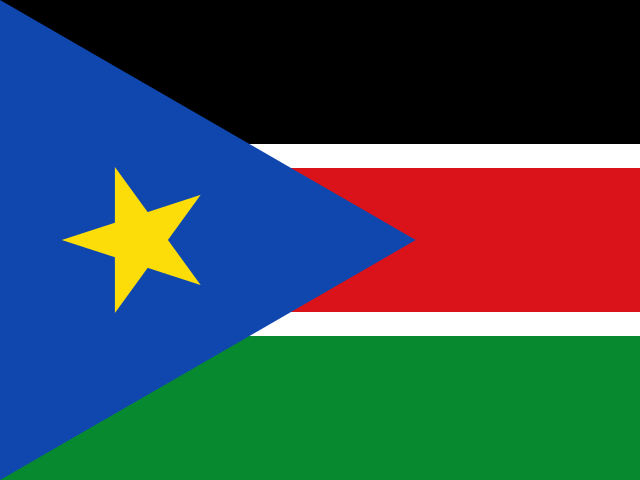
CARE International’s history in South Sudan
CARE has been present in South Sudan since 1970, long before the country’s independence.
Following the Comprehensive Peace Agreement in 2005, CARE expanded its work into Jonglei and Upper Nile. In 2011, after independence, CARE established its South Sudan country office in Juba.
Today, CARE works in several parts of the country, including Jonglei, Unity, Western Bahr el Ghazal, Eastern Equatoria, and the Ruweng and Pibor Administrative Areas. CARE supports communities affected by conflict, displacement, and climate shocks by responding to urgent needs while supporting longer-term recovery.
CARE and partners’ work in South Sudan today
CARE works with communities and local partners to provide life-saving support and help families rebuild their lives. Our work focuses on:
Crisis response
CARE provides humanitarian assistance to communities affected by conflict, displacement, and climate shocks. This includes food assistance, cash support, protection services, and essential supplies.
Food and water
We support families to improve food security and nutrition through agricultural support, livelihood activities, and access to safe water and sanitation.
Health
CARE provides essential health services through health facilities and mobile clinics, expanding access to maternal health care, emergency services, and support for adolescents, particularly in hard-to-reach areas.
Making the economy work
We support households to earn an income and support themselves through savings groups, agricultural activities, and small-scale business support.
Gender equality
CARE works to prevent and respond to gender-based violence and supports women’s participation in community life, peacebuilding, and decision-making.
CARE also works in partnership with government institutions, UN agencies, and local organizations such as Universal Intervention and Development Organization (UNIDOR) and the Coalition for Humanity to deliver programs and support locally led responses.
Focus on women and girls
Women and girls are at the centre of CARE’s work in South Sudan.
CARE supports women and girls not only through services, but by strengthening their voice, leadership, and participation in their communities.
Programs such as Women Lead in Emergencies and Women’s Voices and Leadership support women’s organizations to take on leadership roles in humanitarian response and community decision-making.
CARE and our partners support women and girls through:
- Safe spaces and support services for survivors of gender-based violence
- Opportunities to earn an income through savings groups and livelihood activities
- Maternal and reproductive health services
- Community programs that engage men and boys and promote more equitable social norms
- Support for women’s participation in peacebuilding and governance
CARE works with a range of partners, including government ministries and local organizations, to ensure programs respond to community needs.


